Growing an outbound sales operation sounds straightforward. Hire more agents, make more calls, close more deals.
But anyone who has tried it knows the reality is messier than that.
Call volume goes up but contact rates drop. You add agents but performance stays flat. Processes that worked for a team of five start breaking at 15. And somewhere in the middle of it all, your best reps burn out.
At Readymode, we see this firsthand with hundreds of outbound sales teams across different industries. The ones that excel have scalable processes that grow and adjust with the team.
So based on what we’ve seen work across hundreds of teams, here’s how to scale your outbound operation the right way.
TL;DR: Proven Outbound Scaling Strategies
Scaling outbound calling means increasing your output without the same increase in cost or effort.
Here’s what that takes:
- Standardize your sales process: Create repeatable workflows and scripts for every stage of the sales cycle.
- Invest in the right dialing technology: Use multimode dialing, built-in CRM, and caller ID reputation tools.
- Focus on agent productivity before headcount: Fix efficiency gaps before adding more people.
- Clean up your lead data: Remove bad data so your processes can perform at scale.
- Build a coaching program that scales: Provide continuous feedback to keep performance from drifting as you grow.
- Track the metrics that matter: Monitor contact rate, connect rate, conversion rate, and speed to lead, not just dial counts.
Readymode iQ brings all of these capabilities together in one platform, built specifically for outbound teams that are serious about scaling.
What Does It Mean to Scale Outbound Calling?
In outbound calling, scaling means increasing your output without a proportional increase in cost or effort.
That could mean more conversations per hour, shorter gaps between calls, faster follow-ups, or better conversion rates across the board. The goal is efficiency that compounds as your operation gets bigger.
Scaling isn’t the same as growing your headcount. Adding two agents to your team is growth. Building a system that lets 10 agents perform like 20 is scaling.
Across the outbound teams we work with at Readymode, we typically see the following scenarios that push teams to scale:
- A BPO or agency taking on a new client with double the call volume
- A real estate or solar team expanding into new markets
- A call center where manual processes are visibly slowing agents down
- A growing sales team where onboarding new reps keeps breaking existing workflows
In each case, the answer isn’t just more people. It’s better processes, smarter tools, and a foundation built to handle growth without falling apart.
Why Scaling Outbound Is Harder Than It Looks
Many teams we’ve worked with tell us they initially underestimated how hard it can be to scale outbound operations. They ignored minor inefficiencies, thinking they didn’t matter. But as they scaled, everything multiplied, creating serious business challenges.
We see these problems fall into three main areas:
- Agent Burnout and Turnover: Sales is already a demanding job. According to Gartner, 90% of sales professionals feel burned out by work. When you scale volume without scaling support, agents end up making more calls, hitting more voicemails, and having fewer real conversations. That ratio wears people down fast. High turnover then creates a constant recruiting and training cycle that eats into productivity and keeps your operation stuck.
- Manual Processes That Break Under Pressure: A team of five can survive on spreadsheets and manual dialing. A team of 20 can’t. Every hour an agent spends logging calls, updating records, or switching between tools is an hour they’re not selling. These inefficiencies multiply when you hire more people.
- Performance Drops as Volume Grows: If your numbers are flagged as spam, your contact rate drops regardless of how many dials your agents make. If your lead data is outdated, volume just means burning through bad lists faster.
6 Proven Strategies to Scale Outbound Calling Successfully
To scale your outbound calling operations, think about long-term processes and systems that are flexible enough to adjust with changing demands while following standards that can be replicated across your teams.
Here’s how to do it:
1. Standardize Your Sales Process First
Before adding more agents or more call volume, you need a process every rep can follow consistently. That means documented workflows for every stage of the sales cycle: initial outreach, follow-up cadences, objection handling, and conversion.
Research shows that new sales hires become job-ready up to 50% faster when they’re given a clear, documented sales process, compared to those learning without a standardized system. Without documentation, each new hire brings their own approach, and your results stay unpredictable.
Dynamic scripts help here. They give agents a reliable framework while leaving room for real conversations. When every rep works from the same playbook, performance becomes easier to measure, coach, and improve.
2. Invest in the Right Dialing Technology
It’s hard to scale your outbound operations with manual dialing. If your agents are still clicking through numbers one by one, you’re leaving a significant number of conversations on the table every single day.
A predictive dialer changes that. Instead of waiting between calls, it connects agents to live answers automatically.
Readymode supports multimode dialing, including preview, power, progressive, and predictive, handling up to 20+ concurrent calls per agent depending on your setup.
Beyond dialing, the right platform should include a built-in CRM with lead management and dynamic scripts, along with features like local presence dialing so agents aren’t jumping between tools mid-call.
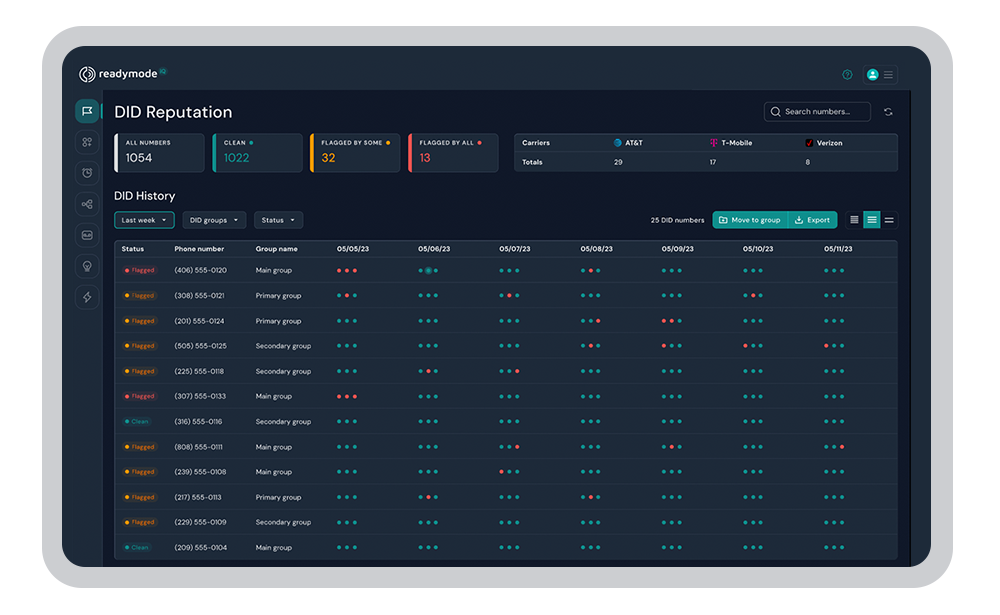
For teams dealing with flagged numbers, Readymode iQ adds caller ID reputation monitoring, Assisted Remediation, and Autopilot.
Autopilot uses carrier-level intelligence to automatically dial from a number that’s trusted by the lead’s specific carrier, which helps improve answer rates.
By automating these core parts of your outbound operations, you not only boost agent efficiency and productivity but also dramatically reduce costs while still getting much more done than before.
3. Focus on Agent Productivity Before Headcount
Research shows that employee productivity losses cause organizations worldwide up to $190 billion annually. Hiring more reps before fixing productivity issues just multiplies those problems.
If an agent is spending 40% of their shift on hold, logging calls manually, or waiting for the dialer to connect, adding five more agents with the same setup doesn’t help.
The metrics worth tracking before you scale headcount are calls per hour, contact rate, connect rate, conversion rate, and speed to lead. If these numbers are weak, that’s where to focus first. Once they’re solid, adding headcount actually moves the needle.
4. Clean Up Your Lead Data
Good processes can’t save bad data. If your lead lists are outdated, duplicated, or poorly segmented, your agents are burning time on contacts that may never convert.
A few practices that drive better outcomes:
- Scrub lists regularly against your internal DNC list and the National DNC Registry.
- Segment leads by intent level, industry, or campaign so agents are always working the most relevant contacts first.
- Put high-intent leads at the top of every queue.
- Remove or re-qualify leads that haven’t engaged after multiple attempts.
Readymode’s lead management tools let you organize, prioritize, and protect your lists without leaving the platform. These are the highest-leverage things you can do before scaling volume.
5. Build a Coaching Program That Scales With You
Most outbound teams invest in training during onboarding and then stop. That works when you have three agents, not when you’re managing 15 across different shifts.
Continuous coaching is what separates teams that maintain performance as they grow from those that see it decline.
Reviewing call recordings regularly, tracking analytics by agent, and giving specific feedback based on actual customer calls keeps performance from drifting.
Readymode’s live floor monitoring lets managers listen in on active calls, whisper coaching notes directly to the agent without the prospect hearing, or join the call if needed.
These features mean you can coach in real time and continuously improve agent performance.
6. Track the Metrics That Matter
The teams that grow successfully track the right numbers consistently. And by that we mean going beyond total dials.
Dials only tell you how busy your team is, not how well your operation is working. As you scale, the gap between activity and results widens fast if you’re not watching the right numbers.
Here’s what you should focus on:
- Contact rate: What percentage of calls result in a live conversation
- Connect rate: How many calls are reaching the intended person
- Conversion rate: How many conversations turn into the desired outcome
- Calls per hour: Agent activity and dialer efficiency
- Speed to lead: How quickly new leads are being contacted after coming in
These numbers tell you where your operation is healthy and where it’s leaking. If contact rates drop as you add volume, your numbers may be getting flagged.
If conversion rates fall as you hire, your onboarding or coaching needs work. Each metric points to a specific problem you can fix.
Common Mistakes to Avoid When Scaling Outbound Operations
Getting the strategy right is only half the battle. Some of the most avoidable scaling failures we see come down to decisions made during the growth phase itself, when teams are moving fast and not paying attention to the warning signs.
Mistake #1: Scaling Volume Without a Clear Goal
Before you scale, define what success looks like. Why do you want it in the first place? Are you trying to increase your contact rate? Book more appointments per day? Move leads through the funnel faster?
Each of these requires a different approach.
For example, if you want to improve your contact rate, increasing the number of dials won’t help if your numbers are flagged. You need to fix your caller ID reputation first. If you want faster lead conversion, the problem might be in your follow-up cadence, not your call volume.
If you skip this step, you won’t know whether your scaling effort is working or whether you’re just exhausting your lead lists at a higher speed.
Mistake #2. Ignoring What Your Agents Are Telling You
Many managers focus entirely on numbers during a scale-up—like call volume, contact rates, or conversion rates. What they miss is the human layer underneath those numbers.
Your reps are on the front line every day. They know which scripts aren’t landing, which lead sources are underperforming, and where the workflow breaks down.
For example, an agent might notice that leads from a specific source consistently hang up within the first 30 seconds. That points to a targeting or messaging issue, not just a volume problem.
A simple weekly check-in adds context to what you’re seeing in your dashboards, helping you understand why certain trends are happening and where to take action faster.
Mistake #3: Sticking With Outdated Manual Tools
One of the most common scaling mistakes we see is teams trying to grow on top of tools that were never built for scale in the first place.
For example, a spreadsheet that tracked leads for one campaign falls apart across five. A disconnected CRM that required agents to manually log every call starts costing hours of productivity every single day.
These inefficiencies multiply as you grow.
Switching to automated and integrated platforms like Readymode iQ solves this problem. For example, a team manually dialing and tracking outreach in spreadsheets might manage 50 calls per agent per day. The same team on a predictive dialer with built-in lead management can reach that number before lunch.
Mistake #4: Poor Compliance and Call Quality Control
Many teams treat compliance as an afterthought during periods of growth. They’re focused on
hiring, training, and hitting call volume targets.
That’s a costly mistake. The more agents you have making more calls across more states, the greater your exposure to violations. A single TCPA violation can typically result in fines ranging from $500 to $1,500 per call. Now imagine those fines stacking across thousands of calls.
State calling restrictions, internal DNC list management, and call recording requirements all need to be built into your processes before you expand, not after.
Readymode’s built-in compliance tools include state calling restrictions and internal DNC list management, along with integrations that support scrubbing against the National DNC Registry, helping ensure nothing falls through the cracks as your operation grows.
Real-World Examples: Scaling Outbound the Right Way
The strategies above aren’t theoretical. Many Readymode clients have successfully scaled their operations, resulting in significant business growth.
Here are three examples.
Example #1: VABizGrowth: 500% Increase in Contact Rates
Kim Irons runs VABizGrowth, a BPO call center serving real estate, solar, and roofing clients. Before switching to Readymode, her team was getting contact rates of 1–2% with other dialers. After moving to Readymode iQ, that increased to 8–12%.
In a 4-hour shift, a single agent went from speaking with 3–10 people to 100–120, highlighting a significant jump in both contact rates and overall productivity.
Example #2: Premier Home Solutions: 4x Productivity Boost
Premier Home Solutions was manually dialing and tracking every appointment in spreadsheets. Their appointment setters were constantly switching between dialing, logging, and scheduling, which broke their momentum and capped how many homeowners they could reach each day.
After adopting Readymode and upgrading to Readymode iQ for caller ID reputation monitoring, they achieved a 4x increase in productivity. Their team of 25+ agents was fully onboarded within a single day.
“Readymode is totally worth it. It’s really helped our business grow and stay consistent as we grow.”
– Gabrielli Lopes, COO & Co-Founder of Premier Home Solutions
Example #3: Dial Masters Solutions: 30% Higher Lead Conversion
Dial Masters Solutions handles high outbound call volumes for real estate clients. Flagged numbers were killing their connect rates, and manual checks to identify them were eating into agent time every day.
After switching to Readymode iQ, they replaced the manual process with automated caller ID reputation monitoring.
Within three months: 30% increase in lead conversion rate, 25% increase in agent productivity, and 20% increase in customer engagement.
“Partnering with Readymode has been a game changer for our business.”
– Mostafa Yehia, Managing Partner of Dial Masters Solutions
Are You Ready to Scale Your Outbound Operations?
Scaling outbound calling comes down to three things: the right processes, the right data, and the right tools. Get those in place before you grow, and everything else becomes easier to manage.
If you’re ready to see what a platform built for outbound scale looks like in practice, book a demo with Readymode iQ and we’ll show you exactly how it works for your team.

Jawad Khan
Jawad is a seasoned content marketer and freelance technology writer featured in some of the world's leading digital marketing, e-commerce, and software related publications. As an expert contributor, Jawad has written for startups and enterprises, including Fortune 500 companies, across various tech verticals.